Advertisement

The Language of Mergers and Acquisitions: M and A Deal Spanish Vocabulary
By Juliana Daniel / Mar 23, 2026

What Is The Best Month To Visit Napa Valley?
By Juliana Daniel / Jan 14, 2026

Mountain Mystique: The Sar Pass Trek in Kasol
By Sean William / Mar 02, 2026

Agile vs. Ágil: Adapting Project Management Methodology Terms in Spanish
By Juliana Daniel / Mar 23, 2026

How to Save Money on Beauty Products
By Juliana Daniel / Jan 02, 2026

The Financial Impact of Consumerism
By Juliana Daniel / Jan 30, 2026
Advertisement
Humayun's Tomb, Delhi Information with History, Timings, and More
Mar 14, 2026 By Juliana Daniel
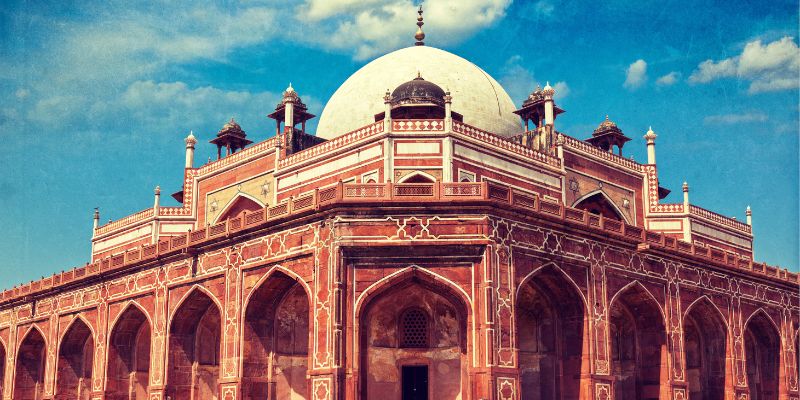
Delhi is home to a timeless architectural masterpiece and historical site. Welcome to Humayun's Tomb, where intricately carved stone whispers of bygone periods, history lingers in the air, and the Mughal Empire's richness is revealed. This stately mausoleum stands tall against the azure sky as dawn breaks and the sun rises, reflecting its golden hues on the red sandstone façade and marble embellishments.
Travelers and history buffs are drawn to explore its enchanted beauty. This 16th-century architectural marvel is a testimony to a period when talent and skill combined to produce timeless masterpieces. Take a trip through time to see this UNESCO World Heritage Site's beautiful details, tranquil grounds, and royal aura.
Humayun's Tomb: Everything You Need To Know
Below, you can find everything about the Tomb of Humayun:
History Beckons: The Legacy of Humayun's Tomb:
In the middle of the city's bustling turmoil, this beautiful monument bears witness to the glory of the Mughal era. Humayun's Tomb was constructed in 1569 at the request of Empress Bega Begum in memory of her husband, Emperor Humayun. The creation of the mausoleum marked the beginning of a new era in architecture since it combined Persian and Indian styles in a single stunning work of art designed by the Persian architect Mirak Mirza Ghiyas.
Delhi's Humayun's Tomb Architecture:
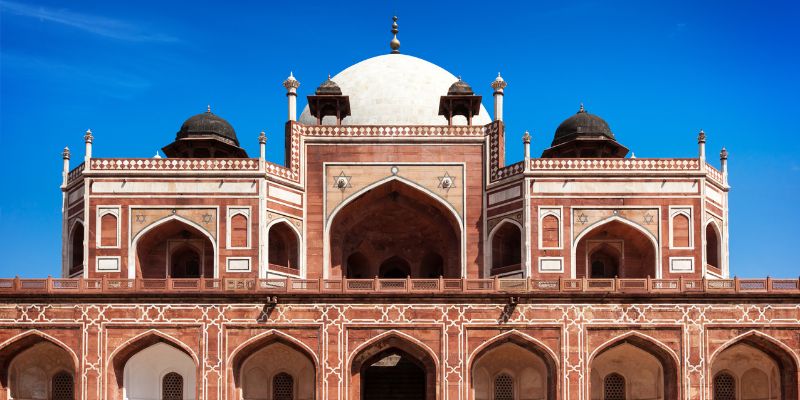
Humayun's Tomb Delhi's Persian-Indian architecture showcases Mughal grandeur. Its symmetrical design, elaborate details, and expert craftsmanship make this 16th-century magnificent edifice famous. The juxtaposition of red sandstone and white marble makes the Tomb stand out. The main tower has a central dome, smaller domed chattris (kiosks), towering arches, and graceful pillars. These architectural components promote balance and harmony.
Humayun's Tomb's elaborate geometric patterns, calligraphy, and costly stone inlay demonstrate Mughal craftsmanship. The monument's external and interior floral designs, arabesques, and Quranic phrases show the attention to detail. Pathways and water canals divide the burial garden into four Persian char bagh-style quadrants.
The complex's lush grass, vivid flowers, and tranquil water features make it lovely. Humayun's Tomb's beauty inspired Mughal buildings like the Taj Mahal. Its grandeur, precise design, and fine craftsmanship make it a UNESCO World Heritage Site and a testimony to Mughal architecture.
Timings and Visitor Information:
Visitors can visit Humayun's Tomb daily except Mondays. Sunrise until sunset gives you plenty of opportunity to admire the monument. Avoid midday heat and crowds by visiting early morning or late afternoon. For the Indians and SAARC nations, the entry fee is 35 INR, while for the foreigners, the entry charges are 550 INR. The complex may also hold special events or exhibitions illuminating the monument's history and culture.
Preservation Efforts and Significance:
Over the years, Humayun's Tomb has been restored and conserved to preserve its beauty. The marble inlays, latticework, and structure have been lovingly restored to their former beauty. The mausoleum is culturally and historically significant beyond its architecture. It represents the Mughal Empire's cultural patronage and India's rich past through artistic and architectural styles.
Char Bagh:
Char Bagh, meaning Four Gardens, is a stunning aspect of Humayun's Tomb. This architectural masterpiece depicts Persian gardens. The Char Bagh splits the land into four equal pieces in a beautiful, attractive, and spiritually significant form. The garden evokes Islamic paradise with manicured lawns, pathways, water channels, and brilliant flowerbeds. Each Char Bagh quadrant is meticulously planned and maintained, blending nature with geometry.
The peaceful Charbagh Garden and stunning Humayun's Tomb create a wonderful atmosphere. The lush vegetation, aromatic flowers, and running water channels make it a local and tourist favorite. The Char Bagh is a lovely garden of historical and cultural value. It shows Mughal architectural brilliance and design. Artisans who planned and executed the Char Bagh showed their attention to detail and aesthetic sensibility.
Things to See in the Humayun's Tomb Complex:
Besides Humayun's Tomb, this complex has many tombs and monuments:
- Isa Khan tomb/mosque: Afghanistan nobility Isa Khan Niazi's mausoleum structure is in Sher Shah Suri's court. He fought the Mughals. Sher Shah's son, Islam Shah Suri, built the octagonal Tomb. The octagonal garden later became Isa Khan's family tomb.
- Bu Halima's crypt and garden: This attraction is on Humayun's Tomb's western side. There is little information about Bu Halima, and the Tomb is likely a later addition.
- The mausoleum and mosque of Afsarwala: Akbar's court respected Afsarwala, whose mausoleum stands southwest of Humayun's mausoleum. There is also a mosque dedicated to Afsarwala near the Tomb. This structure dates from 1566-67 CE.
- Arab Sarai: Delhi's Mehrauli Arab Serai is a 16th-century caravanserai. When Emperor Sher Shah Suri built it, traders and travelers from Central Asia and Arabia rested and slept there. This ancient property has an arched entryway and a courtyard with chambers for merchants to rest and work. Delhi's thriving economic and cultural contacts are shown at the Arab Serai.
- Nila Gumbad: The blue-tiled Nila Gumbad (Blue Dome) is outside the compound. Its distinctive structure is octagonal outside and square inside. Abdul Rahim Khan-I-Khana, Akbar's courtier, erected it for Miyan Fahim.
- Chillah Nizamuddin Aulia: Chilla Nizamuddin is a spiritual retreat and Tomb for 14th-century Sufi mystic Hazrat Nizamuddin Auliya. In Delhi's crowded Nizamuddin neighborhood, this serene location attracts pilgrims seeking spiritual peace. The saint meditated and contemplated in the Chilla, a spiritual retreat. The Indo-Islamic Tomb is set in a magnificent garden with its dome and elaborate stone carvings.
- Barber's Tomb by Humayun: A lesser-known but historically significant monument in Delhi's Lodhi Gardens is the Tomb of Barber, also known as Nai Ka Gumbad. This 16th-century Lodi dynasty building is basic but attractive. The Tomb may belong to a Lodi royal barber. The Tomb's octagonal shape and beautiful arched openings attract history buffs.
Conclusion:
Humayun's Tomb's living art and cultural blending make it more than a monument. Its history, architecture, and Mughal legacy continue to captivate visitors worldwide. Visits to this spectacular mausoleum are a voyage through history, architectural refinement, and India's vast cultural traditions. Make sure you visit Humayun's Tomb in Delhi. Discover the Mughal era's grandeur and this architectural marvel's eternal beauty. Humayun's Tomb, one of India's most famous monuments, is a calm oasis in Delhi's bustling cityscape.

An Overview of Adjustable-Rate Mortgage
By Kelly Walker / Mar 04, 2026
An adjustable-rate mortgage can offer lower initial interest rates and monthly payments than a fixed-rate mortgage. However, it comes with risks and uncertainties, especially when interest rates increase. Borrowers with ARMs should understand their loans' terms, monitor interest rate changes, and be prepared for potential changes in their monthly payments. The adjustment period is the frequency at which the interest rate can adjust after the initial rate period. These steps allow borrowers to manage their finances better and make informed mortgage decisions

Best of Austin: Top 10 Restaurants Every Foodie Should Visit
By Paula Miller / Mar 11, 2026
Discover the top 10 places to eat in Austin, featuring some of the best restaurants in Austin. Whether you're into tacos, BBQ, or fine dining, this guide has you covered

Decoding the Consumer Confidence Index: A Key Economic Metric
By Juliana Daniel / Jan 13, 2026
Decoding the Consumer Confidence Index: A Key Economic Metric

The Ultimate List of Tax Deductions for Gen Z Freelancers (You're Probably Missing Some)
By Juliana Daniel / Feb 18, 2026
Personal Finance for Gen Z Gig Workers

Spanish for Software Localization: Key Concepts for Product Managers
By Juliana Daniel / Mar 23, 2026
Spanish for Software Localization: Key Concepts for Product Managers

Key Spanish Terminology for the Tech and SaaS Industry
By Juliana Daniel / Mar 23, 2026
Key Spanish Terminology for the Tech and SaaS Industry